




पंच महाव्रत
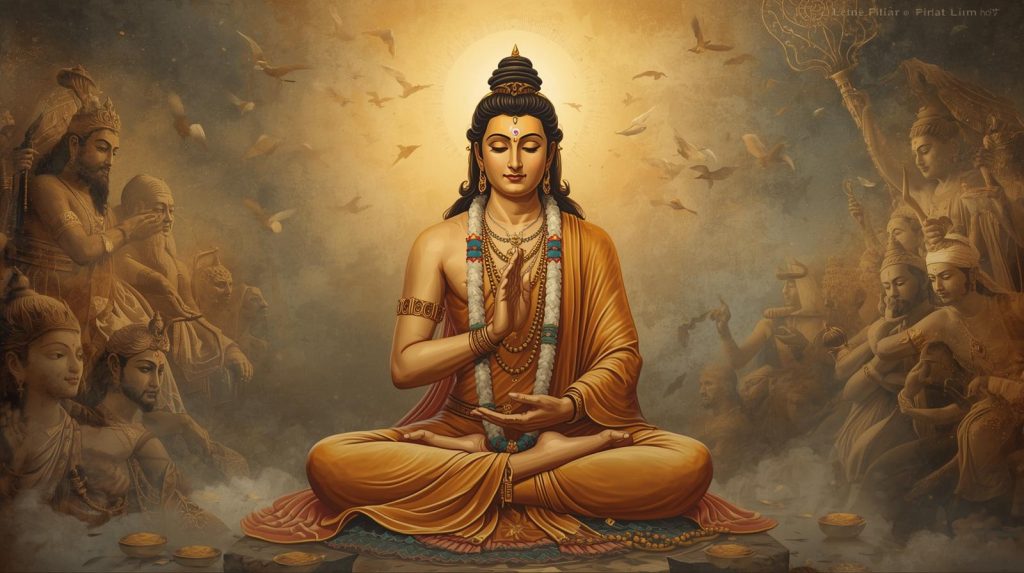
The fundamental principles taught by Vasupujya Bhagwan for spiritual purification and liberation
Non-Violence in Thought, Word & Deed
Vasupujya Bhagwan taught that Ahimsa is not merely the absence of physical violence, but the complete elimination of harmful intentions toward any living being. This includes avoiding injury through thoughts, words, and actions.
True Ahimsa extends to protecting the environment, consuming mindfully, and fostering compassion for all forms of life – from the smallest microorganisms to the largest creatures
🌱Vegetarian/Vegan lifestyle
🗣️Kind and gentle speech
💭Peaceful thoughts and intentions
🌍Environmental protection
Absolute Truthfulness
Satya, as taught by Vasupujya, encompasses complete honesty in all aspects of life. It means speaking truth that is beneficial, avoiding falsehood, and maintaining integrity in all dealings.
However, truth must be tempered with compassion. If speaking truth causes harm, one should remain silent rather than speak hurtful truths or resort to lies.
🎯Honest communication
⚖️Fair business practices
🪞Self-honesty and introspection
💝Compassionate truthfulness
Non-Stealing & Contentment
Asteya goes beyond not taking what belongs to others. Vasupujya taught that it includes not wasting resources, not taking more than needed, and being content with what one has earned righteously.
This principle extends to respecting others’ time, ideas, and emotional energy. It cultivates gratitude and reduces the endless cycle of desires that bind the soul.
💰Honest earning and spending
⏰Respecting others’ time
🌱Not wasting natural resources
💡Crediting others’ ideas
Celibacy & Energy Conservation
Brahmacharya, as taught by Vasupujya, involves the conservation and proper channeling of vital energy. For monks, it means complete celibacy, while for householders, it means moderation and fidelity.
This principle helps in maintaining mental clarity, physical health, and spiritual focus. It includes controlling all senses and directing energy toward spiritual growth and service.
🧠Mental purity and focus
💪Physical discipline
⚡Energy conservation
🎯Spiritual dedication
Non-Attachment & Simplicity
Aparigraha teaches freedom from excessive attachment to material possessions. Vasupujya emphasized that true happiness comes from inner contentment, not from accumulating worldly goods.
This principle encourages living simply, sharing with others, and recognizing that attachment to material things creates bondage and suffering. It leads to mental peace and spiritual liberation.
This principle liberates the soul from the bondage of desires and attachments. Through aparigraha, one experiences true freedom and discovers that happiness comes from within, not from external possessions.
🎋Simple living
🤝Generous sharing
🧘♀️Mental detachment
☮️Inner contentment
तपस्या और जीवनशैली
The disciplined way of life prescribed by Vasupujya for spiritual purification and liberation
प्रातःकाल - Morning Rituals
Meditation & Prayer
Begin with silent meditation and recitation of sacred mantras
Scripture Study
Daily reading and contemplation of Jain texts
Purification
Physical and mental cleansing rituals
सायंकाल - Evening Practices
Self-Reflection
Daily examination of thoughts and actions
Evening Prayer
Gratitude and seeking forgiveness
Mantra Recitation
Chanting sacred verses before rest
आहार नियम - Dietary Guidelines
Pure Vegetarian Diet
Strictly plant-based, avoiding root vegetables
Mindful Timing
Eating only during daylight hours
Grateful Consumption
Eating with awareness and gratitude
आध्यात्मिक अनुशासन - Spiritual Disciplines
Noble Silence
Periods of complete silence for inner peace
Fasting
Regular fasting for purification
Mindful Movement
Walking and living with awareness
मानव सभ्यता में योगदान
How Bhagwan Vasupujya’s teachings laid the foundation for ethical society and spiritual progress

Foundation of Social Ethics
Vasupujya Bhagwan established the fundamental principles of ethical living that became the cornerstone of civilized society. His teachings on non-violence, truthfulness, and justice created the moral framework for peaceful coexistence.
These principles influenced legal systems, governance structures, and social norms, promoting harmony between different communities and establishing the concept of universal human rights.
Ethical Economic Principles
The principle of Asteya (non-stealing) and Aparigraha (non-attachment) established the foundation for fair trade, honest business practices, and sustainable economic development.
These teachings promoted the concept of earning through righteous means, sharing wealth with the needy, and avoiding excessive accumulation that leads to social inequality.

Environmental Consciousness
Vasupujya's emphasis on Ahimsa extended to environmental protection, making him one of the earliest advocates for ecological balance and sustainable living practices.
His teachings promoted respect for all forms of life, including plants, water bodies, and the atmosphere, establishing principles that are now recognized as essential for environmental conservation.

Holistic Educational System
Vasupujya established the tradition of comprehensive education that included not only intellectual development but also moral, spiritual, and practical life skills.
This educational approach emphasized character building, ethical reasoning, and the development of wisdom alongside knowledge, creating well-rounded individuals capable of contributing to society.

जैन दर्शन की स्थापना
The profound philosophical foundations established by the 12th Tirthankara
कर्म सिद्धांत (Law of Karma)
Every action, thought, and intention creates karmic consequences that determine the soul's journey. Vasupujya taught that understanding and purifying karma is essential for liberation.
आत्मा की शाश्वतता (Eternal Soul)
The soul (Jiva) is eternal, conscious, and capable of achieving perfect knowledge and bliss. It transmigrates through various forms until it attains liberation through right conduct.
मोक्ष मार्ग (Path to Liberation)
Liberation (Moksha) is achieved through the threefold path of Right Faith, Right Knowledge, and Right Conduct, leading to the soul's freedom from all karmic bondage.
सम्यक् दर्शन (Right Faith)
Liberation (Moksha) is achieved through the threefold path of Right Faith, Right Knowledge, and Right Conduct, leading to the soul's freedom from all karmic bondage.
सम्यक् ज्ञान (Right Knowledge)
Correct understanding of reality, including the nature of existence, the workings of karma, and the methods for spiritual purification and liberation.
सम्यक् चरित्र (Right Conduct)
Ethical behavior based on the five main vows, leading to the purification of the soul and gradual elimination of karmic bondage.
आधुनिक जीवन में प्रासंगिकता
How Vasupujya’s ancient wisdom addresses contemporary challenges and guides modern living
पर्यावरण संकट
Environmental Crisis Solutions
Vasupujya’s principle of Ahimsa provides a comprehensive framework for addressing climate change, biodiversity loss, and environmental degradation through compassionate living and sustainable practices.
मानसिक स्वास्थ्य
Mental Health & Wellness
The meditation practices, self-reflection techniques, and ethical living principles taught by Vasupujya offer powerful tools for managing stress, anxiety, and modern mental health challenges.
व्यापारिक नैतिकता
Business Ethics & Corporate Responsibility
Vasupujya’s teachings on truthfulness, non-stealing, and non-attachment provide a solid foundation for ethical business practices, fair trade, and corporate social responsibility in the modern economy.
विश्व शांति
Global Peace & Harmony
The principles of Anekantavada (multiple perspectives) and Ahimsa (non-violence) offer solutions for resolving international conflicts, promoting religious tolerance, and building peaceful societies.
🏠
Personal Life
- Daily meditation practice
- Mindful consumption
- Honest communication
- Compassionate relationships
💼
Professional Life
- Ethical business practices
- Fair treatment of colleagues
- Sustainable work methods
- Honest reporting
👥
Social Life
- Respectful dialogue
- Community service
- Cultural tolerance
- Peaceful conflict resolution
🌍
Environmental
- Reduce, reuse, recycle
- Plant-based diet
- Energy conservation
- Wildlife protection